```php Ocean Freight Services | Vision Axis Global Shipping
Large container ship sailing through open ocean
Ocean Freight

Move More.
Go Further.

Practical, scalable sea freight solutions for businesses moving cargo across international markets. From full containers to consolidated shipments and specialized cargo, we help coordinate the journey from origin to destination.

FCL & LCL

Container solutions for different shipment volumes

Planned Transit

Route and schedule coordination around your cargo

Shipment Visibility

Tracking information from your shipment record

Door-to-Door Options

Coordinate sea freight with inland transport

Built for Global Trade

Ocean freight that gives your supply chain room to grow.

Sea freight is a practical choice when your shipment needs capacity, flexibility and cost-conscious international transportation. It is particularly useful for commercial cargo that does not require the speed of air freight.

Vision Axis Global Shipping can help coordinate the important stages around an ocean shipment — including shipment planning, cargo configuration, port movements, documentation and onward delivery requirements.

Whether you are moving a dedicated container or a smaller consignment that can be consolidated with other cargo, the right shipping method depends on volume, cargo characteristics, timing, destination and handling needs.

  • Containerized commercial cargo
  • Consolidated smaller shipments
  • Oversized and project cargo
  • Port-to-port coordination
  • Inland delivery options
  • Shipment tracking support
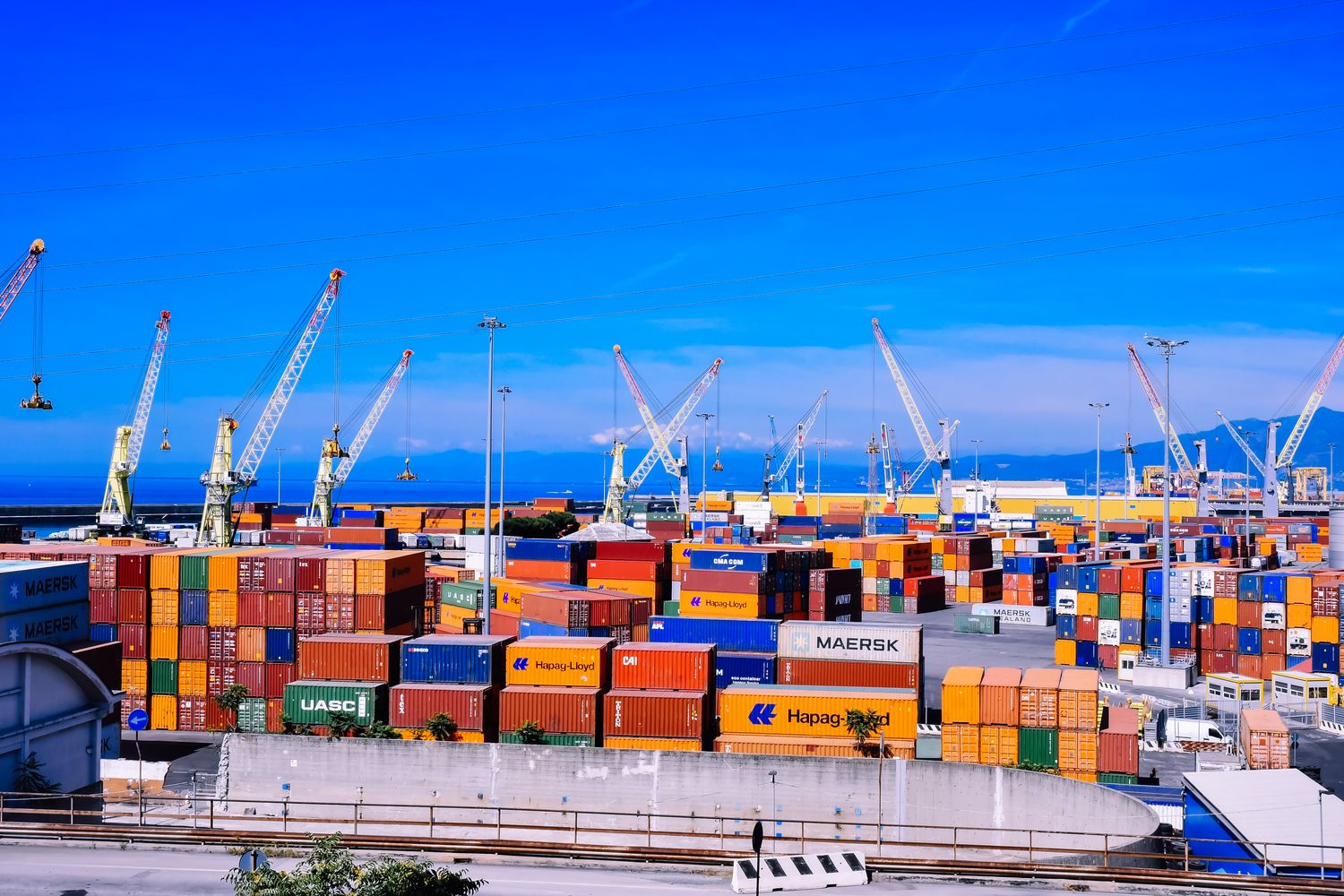
Busy container port with stacked containers and cranes
From port operations to final delivery Ocean freight works best when the sea leg is planned together with the transport and handling around it.
Freight Options

A shipping format for different cargo needs.

The right ocean freight solution depends on how much you are moving, what you are moving and how the cargo needs to be handled throughout the journey.

Colorful shipping containers stacked at a busy port Dedicated Capacity

Full Container Load (FCL)

A dedicated container is allocated to your shipment. FCL is often suitable when the cargo volume is large enough to justify the use of the full container.

  • 20ft and 40ft container planning
  • Reduced shared-cargo handling
  • Suitable for larger commercial shipments
Organized warehouse with pallets and cargo Consolidated Cargo

Less than Container Load (LCL)

Smaller shipments can be consolidated with other cargo rather than reserving an entire container, making LCL useful when the shipment does not fill a container.

  • Useful for smaller cargo volumes
  • Shared container space
  • Pay according to shipment requirements
Port crane handling cargo at a container terminal Specialized Cargo

Project & Breakbulk Cargo

Cargo that cannot be handled as ordinary container freight may require specialized planning, lifting, loading and transport arrangements.

  • Oversized and heavy equipment
  • Project and industrial cargo
  • Special handling coordination
Choosing the Right Option

FCL or LCL? Start with the shape of your shipment.

There is no single best option for every shipment. Volume, handling, schedule and destination all matter when deciding how your cargo should travel.

LCL

Shared Space

Best considered when your shipment is smaller and does not justify reserving an entire container.

  • Best suited to Smaller cargo volumes
  • Container Shared with other shipments
  • Handling Consolidation and deconsolidation
  • Planning Cargo dimensions and volume are important
Container ship at a modern port terminal
How It Works

A clearer path from cargo details to delivery.

Good ocean freight planning starts before the cargo reaches the port. The more accurate the shipment information, the easier it is to select an appropriate transport solution.

  1. Share your shipment details

    Provide the origin, destination, cargo type, dimensions, weight, number of packages and preferred shipping date.

  2. Plan the freight configuration

    We assess whether FCL, LCL or a specialized arrangement is the more appropriate starting point for the shipment.

  3. Coordinate the movement

    The shipment is planned around port handling, documentation, routing and any required inland transport.

  4. Track and manage progress

    Use the shipment tracking service to check the available status information associated with your tracking number.

  5. Coordinate final delivery

    Where required, the sea movement can be connected with onward transport to help move cargo beyond the destination port.

Why Ocean Freight

Built for volume, distance and international trade.

Ocean freight can provide a strong balance of capacity, planning flexibility and cost efficiency for cargo that does not need to move by air.

High Cargo Capacity

Ocean transport is well suited to large volumes and heavier commercial cargo.

Cost-Conscious Transport

For many international shipments, sea freight can be more economical than faster transport modes.

Shipment Visibility

Tracking information gives customers a clearer view of recorded shipment progress.

Multimodal Connections

Ocean freight can be coordinated with road transport and warehousing around the shipment.

Commercial Cargo

Supporting a wide range of business shipments.

Ocean freight can support different industries when the cargo, packaging, handling and documentation are properly planned for the intended route.

Manufacturing & Industrial

Retail & Wholesale

Automotive & Equipment

Construction & Project Cargo

Consumer Goods

Machinery & Components

Food & General Cargo

Importers & Exporters

Prepare Your Shipment

Better information makes better freight planning.

When requesting an ocean freight quotation, accurate cargo information helps the logistics team assess the shipment properly and identify the right transport configuration.

Information to provide

Include as much of the following as possible when submitting a quote request.

  • Collection / origin location
  • Destination port or delivery location
  • Cargo description
  • Number of packages or units
  • Weight and dimensions
  • Preferred shipping date

Cargo considerations

Certain cargo may require additional planning before booking or movement can be confirmed.

  • Oversized or unusually heavy cargo
  • Temperature-sensitive goods
  • Fragile or high-value cargo
  • Restricted or regulated goods
  • Special lifting or loading requirements
  • Destination customs requirements
Ocean Freight FAQ

Questions before you ship?

Here are some of the common questions customers consider when planning an international sea shipment.

FCL means the shipment uses a dedicated container, while LCL means the shipment is consolidated with other cargo in a shared container. The better choice depends mainly on shipment volume, handling needs, route and commercial requirements.
Transit time varies considerably by origin, destination, vessel routing, transshipment, port operations, customs and inland delivery. Instead of using one generic transit figure, request a route-specific estimate for your shipment.
Yes. Depending on the shipment arrangement, ocean freight can be coordinated with inland transport so cargo can continue from the destination port toward its final delivery location.
Project and breakbulk cargo can require different equipment, loading arrangements and documentation from ordinary container freight. Provide accurate dimensions, weight, lifting points and cargo details when requesting a quotation so the shipment can be assessed correctly.
The most useful starting information is your origin, destination, cargo type, number of packages, dimensions, total weight and preferred shipping date. If the cargo is restricted, oversized, temperature sensitive or otherwise unusual, include those details as well.
Yes. Use the shipment tracking page and enter your tracking number to view the tracking information recorded for the shipment.
Ready to Move Cargo?

Let’s plan the right ocean freight solution.

Send us your origin, destination and cargo details. Our team can review the shipment requirements and help you start with a suitable ocean freight quotation.

```